How to Use a Hive Feeder Riser with a Mason Jar or Bucket Feeder
Top feeding usually means setting a jar or bucket right on the inner cover. A feeder riser lifts it up so the colony can feed and still manage its own climate.
The problem with top feeding
Top feeding is one of the simplest ways to give a colony syrup. You fill a mason jar or a bucket feeder, flip it over, and set it on the inner cover. The trouble is what happens underneath. With the feeder sitting directly on the inner cover, you're forced to choose between providing food and letting the colony manage its own humidity and temperature.
Our Hive Feeder Riser solves that compromise. It lifts the feeder above the inner cover, so bees can reach the feed while they keep managing the hive's climate.
The feeder riser is 3D printed in-house at our shop in Southern Wisconsin.
What a feeder riser does
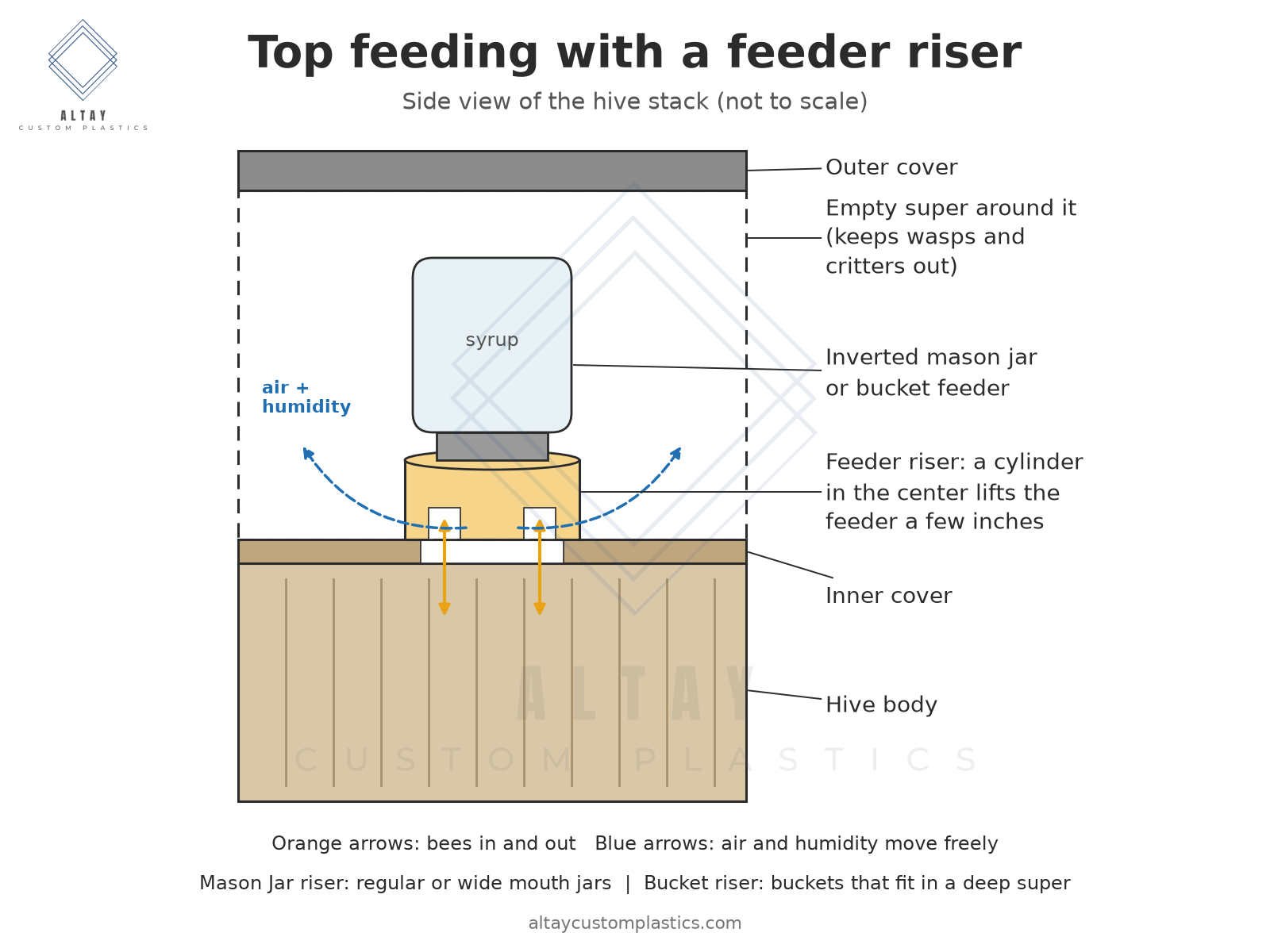
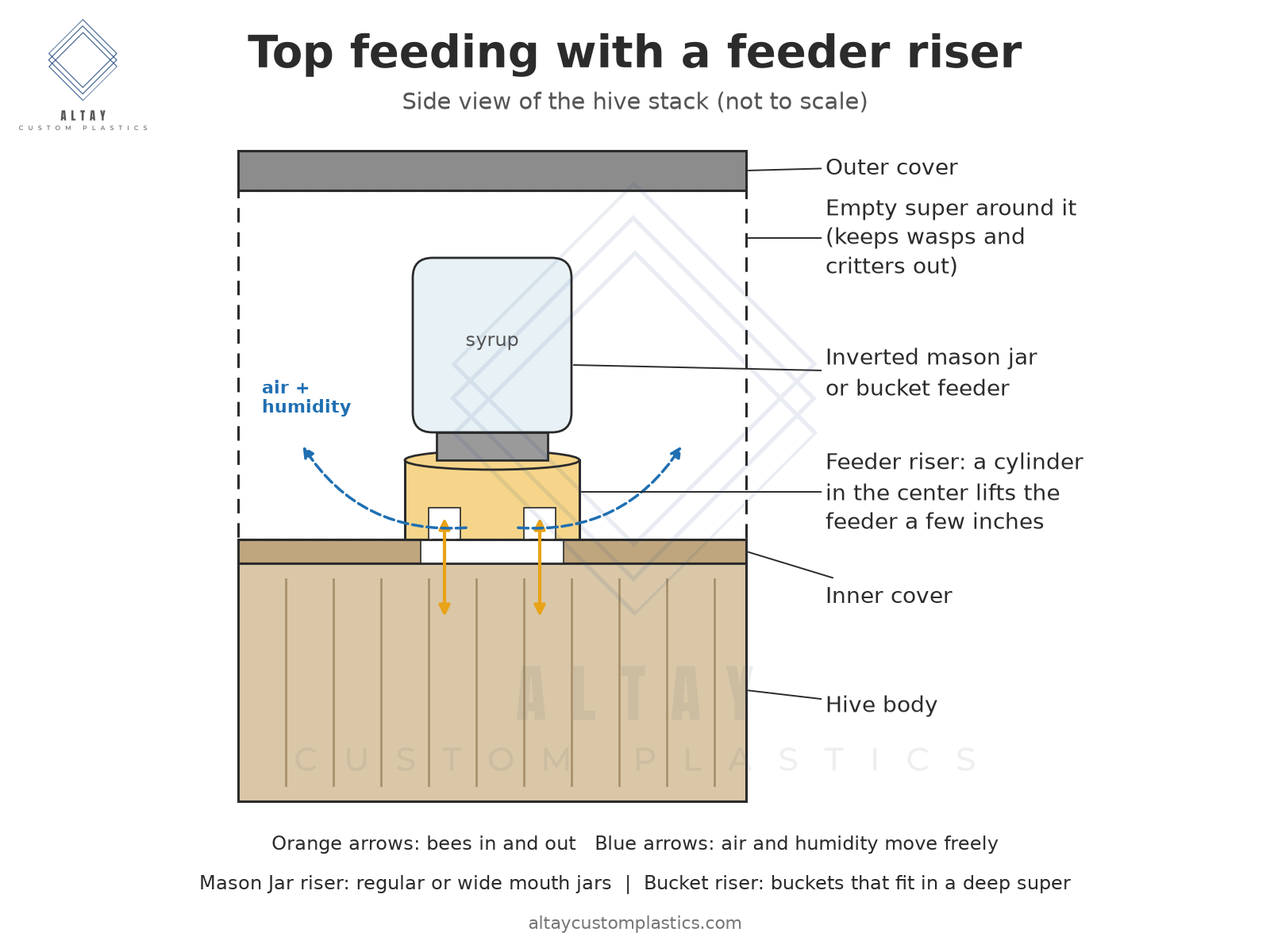
The riser is a cylinder that sits in the center of the inner cover, between the inner cover and your inverted feeder. It lifts the feeder up a few inches, so bees can move in and out and humidity can move in and out around it. According to the product page, it:
- Elevates mason jars or buckets above the inner cover, so bees can maintain natural hive humidity and temperature while accessing feed
- Uses built-in access ports for easy, controlled bee entry and feeding
- Is compatible with common mason jar and bucket feeder sizes
- Is simple to install and remove for refilling, inspection, or winter management
- Is built for long-term use in apiary conditions
Why lifting the feeder matters
By raising the feeder above the inner cover, the riser keeps your feed outside the cluster's microclimate. As the product page explains, this reduces condensation and stress on the colony while keeping nectar substitutes available when needed.
Choose your size: mason jar or bucket feeder
The riser comes in two size options:
| Option | Use it with |
|---|---|
| Mason Jar | Regular or wide mouth mason jars |
| Bucket Feeder | Any bucket feeder that fits within a deep super |
Each riser is $35, and the package includes one feeder riser sized for the option you choose.
How to pick:
- Mason jar: smaller amounts, easy to check, easy to swap a full jar for an empty one.
- Bucket feeder: more feed per fill, so fewer trips to the yard.
How to set it up
- Fill your feeder. Fill your mason jar or bucket feeder with syrup and close the lid.
- Set the riser in the center of the inner cover, where the bees can reach the access ports from below.
- Turn the feeder upside down onto the riser. Do it quickly, right over the riser.
- Put an empty box (super) around it. We recommend this. It encloses the feeder and helps keep wasps and other critters away.
- Close up the hive with the outer cover on top.
- Check and refill. Lift the feeder off to refill it or check feed levels. The riser lifts out just as easily for inspections.
When to use it
The product page lists three main use cases:
- Spring and fall supplemental feeding
- Emergency or short-term feeding during a dearth
- Winter feeding strategies that preserve the hive's internal climate
In winter, many beekeepers check hive weight and feed only when stores look low. Opening the hive briefly on a milder day is common practice, so the colony loses as little heat as possible. Follow the feeding approach recommended for your local climate.
Tips for top feeding with a riser
- Use an empty super around the feeder to help keep wasps and other critters out.
- Keep a spare feeder filled so swaps are quick.
- Watch for leaks after you invert the feeder. A slow drip is normal at first; a steady stream means the lid isn't sealing.
- Check feed levels on a regular schedule, especially during a dearth.
- Don't worry much about cleaning. The riser is printed in PLA plastic, and the bees generally keep it clean for you.
More gear for the yard
If you're feeding colonies, you may also be raising queens or doing regular inspections. We also carry:
- Hive Inspection Frame Hooks, which hold a frame on the outside of the box during inspections
- Mini Mating Nuc Box (Apidea-Style EPS) for queen rearing
Please note: those items are imported products, made in China, selected for practical field use. The feeder riser is the piece we design and print in our own shop.
FAQ
What does a hive feeder riser do? It lifts an inverted mason jar or bucket feeder above the inner cover, so bees can feed while they maintain their own humidity and temperature.
Does it work with mason jars and buckets? Yes. The Mason Jar option fits regular or wide mouth jars, and the Bucket Feeder option fits any bucket feeder that fits within a deep super.
How much is it? $35 for one feeder riser.
What's included? One feeder riser, sized for mason jar or bucket use.
Is the feeder riser made in the USA? Yes. It's 3D printed in-house at our shop in Southern Wisconsin.
Are your other beekeeping products made in-house too? No. Our other beekeeping products are imported (made in China).
What is it made of? PLA plastic, 3D printed in our shop.
Do I need an empty box around it? We recommend one. An empty super around the feeder helps keep wasps and other critters away.
Is the feeder included? No. The riser is the only item included; you supply the mason jar or bucket feeder.
Feed without sacrificing climate control
Give your bees access to feed while they keep managing their own humidity and temperature. Order the Hive Feeder Riser in Mason Jar or Bucket Feeder size. Questions about fit? Contact us.
Related: