
Where Does the Water Come From? Winter Condensation Inside a Beehive
Lift the lid in January and you may find water on the inner cover. It comes from the bees. Here's what our hive simulation shows about where it comes from.
The puzzle of the wet inner cover
It's midwinter, everything outside is frozen solid, and it hasn't rained in weeks. Yet when you peek under the lid on a mild day, the inner cover is beaded with water, or there's frost along the top of the box.
So where does the water come from? The short answer: the bees make it.
To put numbers on it, we used our own honey bee hive simulation. Every hive number below comes from that model. It's a computer simulation, not measurements from a real hive, and it hasn't been calibrated against field data. Use the numbers to picture what's going on, not as a forecast for your colony.
Bees turn honey into heat, and water
A winter cluster doesn't hibernate. The bees pack together and shiver their flight muscles to make heat, fueled by honey. Burning sugar works the same way in a bee as in any animal: sugar plus oxygen becomes energy, carbon dioxide and water. The water leaves as vapor in the bees' breath. Multiply that by thousands of bees, day and night, and the hive fills with warm, damp air.
What our simulation shows on a January day
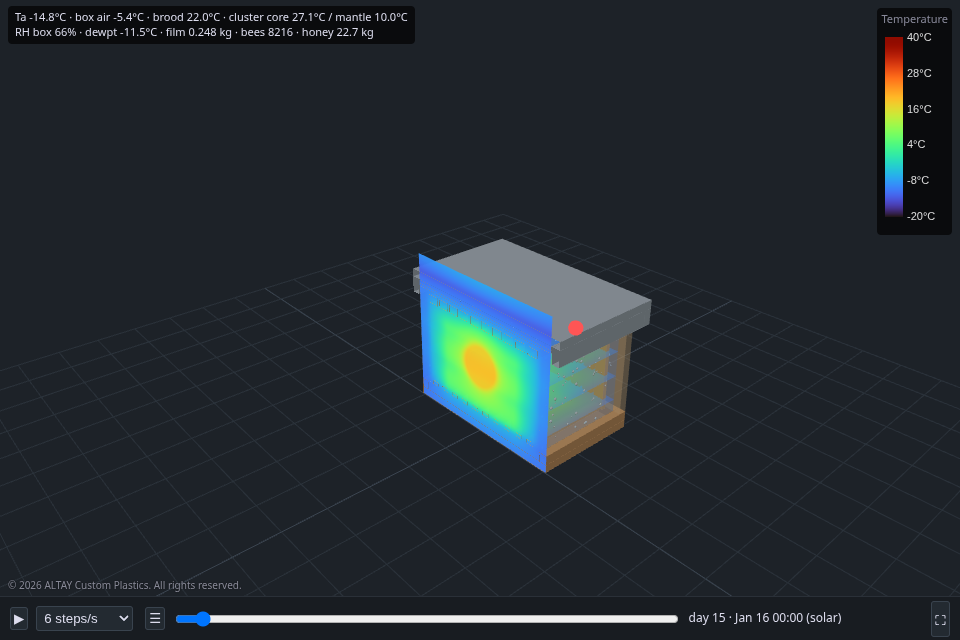
We ran our model for a single deep, standard wooden hive in Edmonton, Alberta. Here's a simulated mid-January day:
- Outside, the air runs from about −15 °C (5 °F) overnight to about −5 °C (23 °F) in the afternoon. These are 3-hour averages, so the real overnight low would be a bit colder.
- Inside the cluster, the core holds near 27 °C (81 °F), while the outer shell of bees sits around 10 °C (50 °F).
- The colony, about 8,300 bees in our model, puts out 13 to 15 W of heat combined. That's roughly the glow of a dim night-light.
- To do it, the bees burn about 94 g of honey that day, a bit over 3 oz.
- And as a result, about 12 g of water (roughly 0.4 oz) condenses inside the box that day, all from the bees' breath.
Twelve grams is only a couple of teaspoons, but in our model it's a single day's worth.
Why the water ends up on the lid
Warm air holds more water vapor than cold air. The warm, moist air around the cluster rises toward the top of the hive. When it touches a much colder surface, like the inner cover or the walls on a frigid night, it cools past its dew point and the vapor turns back into liquid. On the coldest nights it can freeze as frost, then melt on a warmer day. It's the same thing that happens when you breathe on a cold window.
Across a whole year, it adds up
Over a full simulated year in Edmonton, in the same single deep wooden hive, our model shows:
- The colony burns about 72 kg of honey a year (about 159 lb).
- Stores fall from 24 kg (about 53 lb) in fall to about 8 kg (about 18 lb) by spring.
- About 1.4 kg of water condenses inside the hive over the year. That's about 3 lb, or roughly a quart and a half.
- Through it all, the cluster core holds 27 to 36 °C (81 to 97 °F) while outside air averages down to −15 °C (5 °F).
Watch the winter day in our simulator
You can watch that simulated January day play out in our interactive Honey Bee Hive Simulator. Rotate the hive, zoom in on the cluster, and see how the bees use their space, heat and stores while the cold sets in outside.
Common ways beekeepers manage winter moisture
Our model shows where the water comes from, not how to manage it in your yard. Here are approaches many beekeepers use; your local beekeeping club can tell you what works in your area.
- Ventilation. Many beekeepers give the hive a small upper entrance or vent so damp air has a way out instead of collecting under the lid.
- A quilt box. A shallow box filled with an absorbent material such as wood shavings sits above the cluster. The idea is to soak up rising moisture and keep the top of the hive from being the coldest, wettest surface.
- Insulating the top. Some beekeepers add insulation above the inner cover so it isn't the coldest surface in the hive, with the idea that condensation forms on the walls instead of overhead.
- Tilting the hive slightly forward. Raising the back a little lets water that does form run toward the front and out the entrance.
Top feeding without sealing the lid
If you top feed in fall or early spring, a jar or bucket feeder sitting flat on the inner cover can close off that center hole. Our Hive Feeder Riser is a PLA cylinder we 3D print in-house in Southern Wisconsin. It sits in the center of the inner cover and lifts a mason jar or bucket feeder a few inches, so bees and humidity can move in and out underneath. It isn't full hive width, and it doesn't prevent condensation, but it keeps the center opening clear while you feed. Find the rest of our beekeeping gear in the shop.
FAQ
Where does condensation in a winter beehive come from? Mostly from the bees. They burn honey to make heat, and that process releases water vapor in their breath. When the warm, moist air hits a cold surface, it condenses.
How much water does a colony produce in winter? In our simulation, about 12 g (roughly 0.4 oz) of water condenses inside the box on a mid-January day in Edmonton, and about 1.4 kg (about 3 lb) over a full year. That's a model result, not a field measurement, and real hives will differ.
How do beekeepers deal with beehive moisture in winter? Common practices include an upper vent, an absorbent quilt box, insulation on top and tilting the hive slightly forward. Ask local beekeepers what works in your climate.
Does the feeder riser prevent condensation? No. It lifts your feeder a few inches so bees and humidity can move in and out around it while you top feed. It's one piece of gear, not a moisture solution.
Is the simulator based on real hive data? No. It's a computer model, and it hasn't been calibrated against real hive sensors. We use it to illustrate what's going on inside a hive.
See it for yourself
Watch a winter day unfold in the Honey Bee Hive Simulator, then check out the Hive Feeder Riser for your next round of feeding. Questions, or ideas for what the simulator should show next? Contact us.
Related:
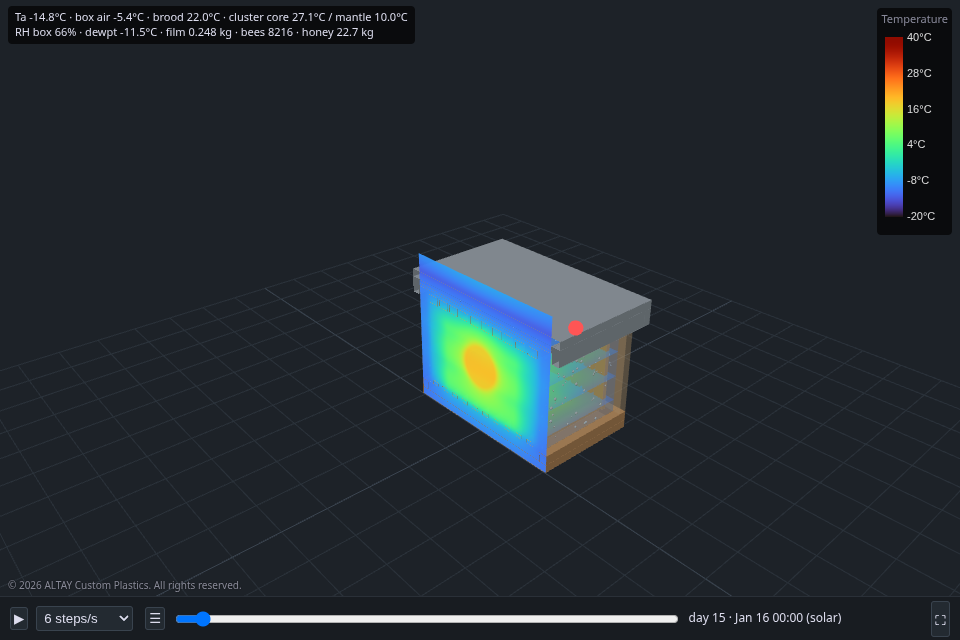
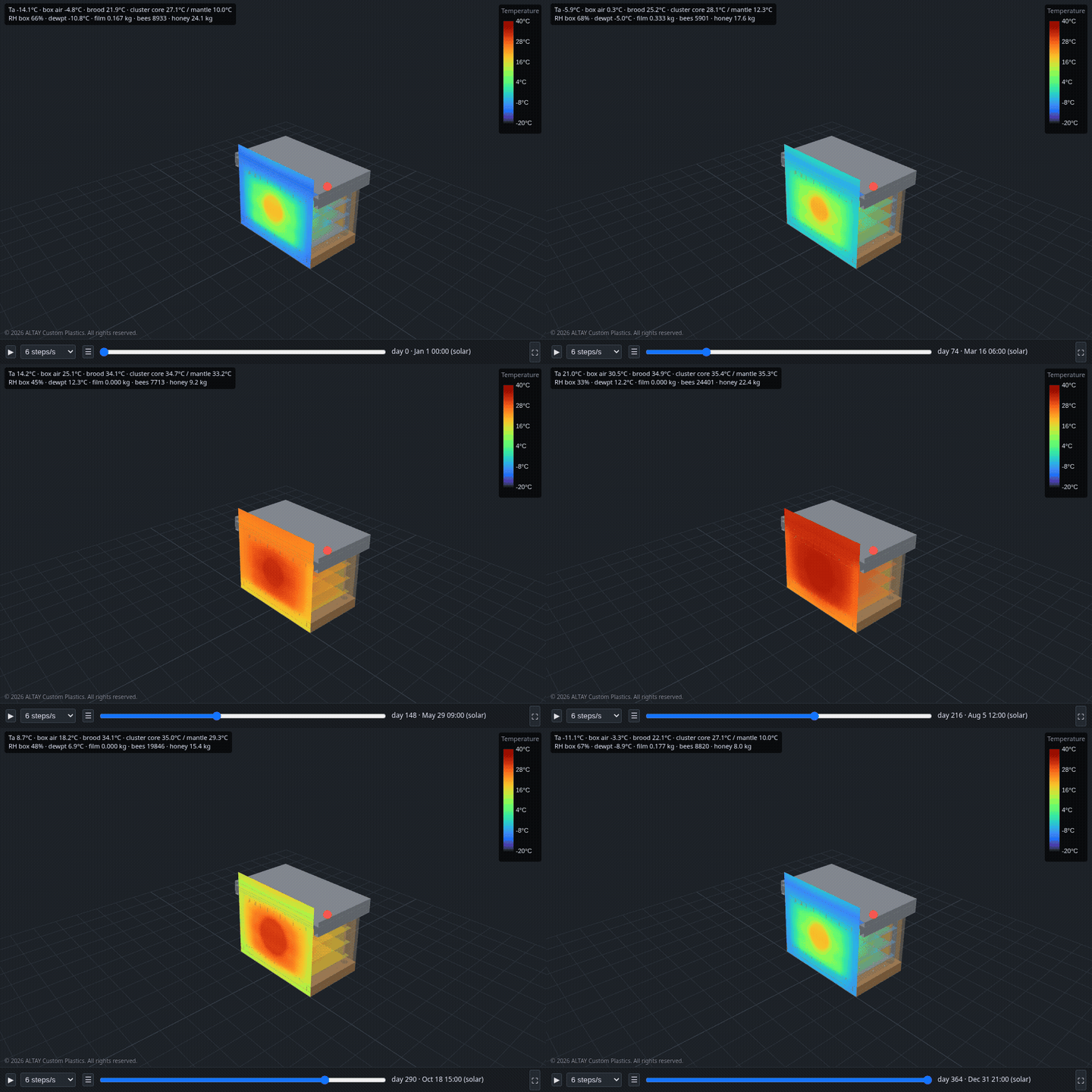
Colors show the model's estimated temperature field, not a thermal photo.
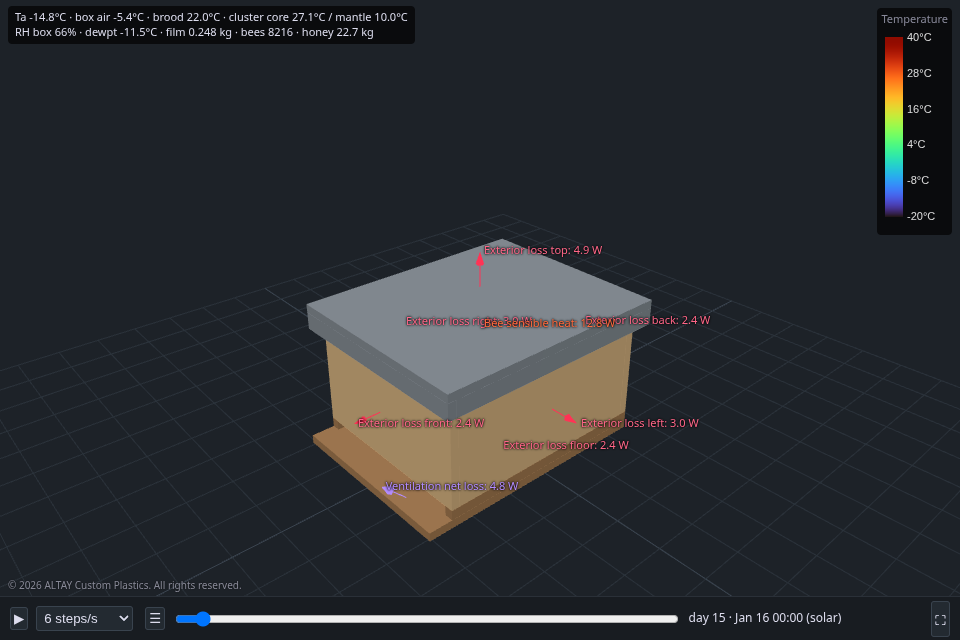
Explore it yourself in our interactive hive simulator.