
TempPro Cycle Testing
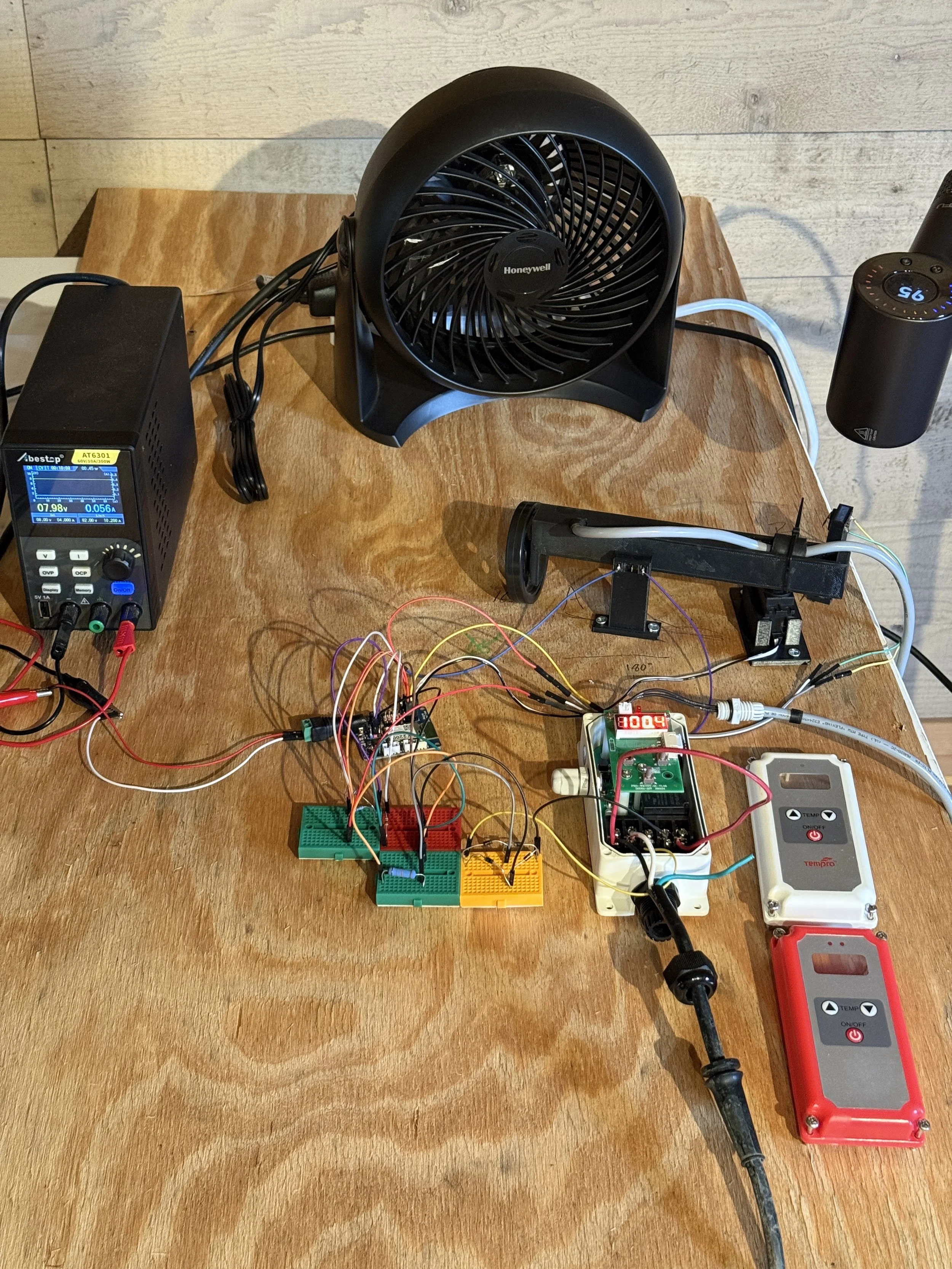
We are finishing up the second phase of our Senasys TemPro cycle testing. One of our customers engages us to automate cycle testing for several of their projects, and for this specific job we needed to reach 20,000 cycles on each unit to provide documentation of their conditions at that cycle count.
Neither we nor anyone else has the time to sit and push a button 20,000 times or to manually move a temperature probe in and out of a heated zone to confirm the unit’s function. With only 1,440 minutes in a day, a two-minute average cooling-and-heating cycle will max out at 720 cycles under continuous testing, and that would make the manual task take weeks of repetitive work.
To address this, we developed an automated system using a servo controller, sensing electronics, and custom software to drive the RTD sensing probe in and out of the hot area thousands of times. The system verifies the servo operation and hold locations, tracks the dwell time in each zone, and when the program detects that the part has either cooled or heated as expected, it logs the data and advances to the next cycle. After every 1,000 cycles we get an update email. For this particular report we will also disassemble the relays and photograph the contacts to document the system’s condition at the conclusion of testing. The automated emails and overnight allow us to monitor testing remotely and know we are operating as intended. Those updates are forwarded to the team contact so they stay fully informed throughout the testing campaign.
The swinging arm and limit switch towers are 3-D printed in house and designed to verify the mechanical systems function. Using the 3-D printing tools and electronics on hand, we have we can field test structures and built out the full testing space. Engineering and design is an iterative process and this helps us adjust the testing system to function over the long cycle times and diverse requirements.
Software Development
Using leading AI programing IDE’s and a designer that knows programming, we accelerate the software and logging of the cycle testing. By using the AI IDE's we cut the software development time down and compress and resolve errors before they impact testing. The other components for servico control and operations are also intelligently designed so cycle counts and other items can adjusted quickly from config files and well organized. This allows us to easily customize the output reports and generate and track all the necessary information for your QA processes.
Hardware Development
With every cycle testing system the other half of its functionality arises from the mechanical system. Even though we were using a heat zone, 3D printed plastics and armature worked excellently for this use case as the heat zone was relatively small and the radiative cooling of the plastic was enough to keep it cool to the touch even while it was heating. Selecting servos and other items to move the necessary components went quickly and allowed get the utility out of the system quickly and keep costs for the entire process low. There is value in aestheticly pleasing automation systems, but for a cycle test that is used only a handful of times creating a modular solution was more important. We can use the servo mount and limit switch towers again for other types of testing. If it needs to be set back up we have the components and layout.
with otherWith other systems that may become more permanent automations for customers, The in house CAD development and layout allows this iterative design process to occur quickly and large print formats make it easy to make the prints in one component versus multiple components. With our printers we operate webcams to view remote operation and This feature could be added for any cycle testing or other testing for remote monitoring as well.
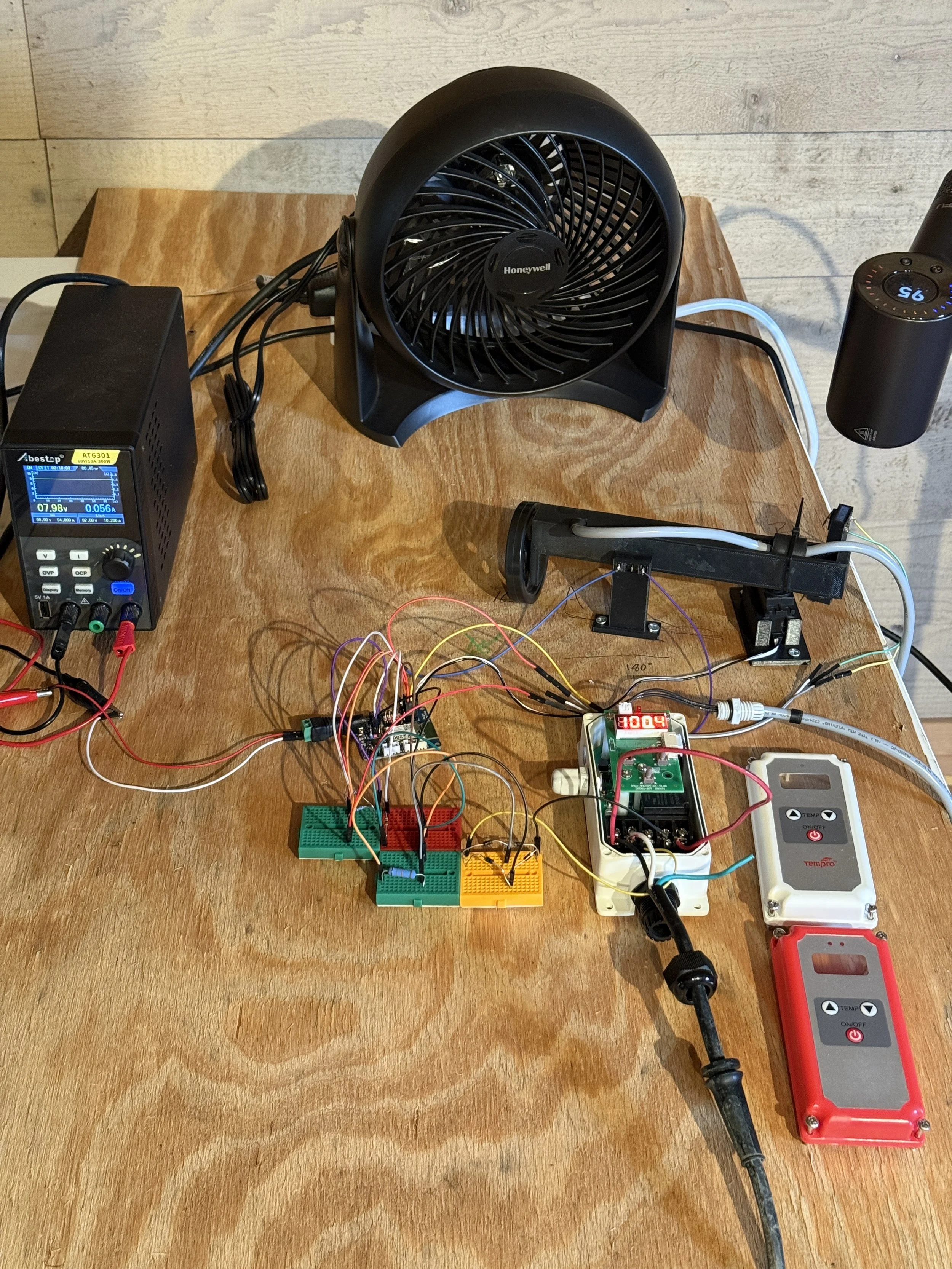
TemPro Cycle Testing Setup
Give us a call to get a quote on a cycle testing system and assistance for cycle testing your projects.

Digitization - Using Software to Duplicate Products
Updated: Jan 20, 2023
A client reached out to duplicate a master copy of a model they had. The complex horse saddle was an excellent test case for ALTAY to expand into secondary services for model reproduction. After a brief phone call, quote, and email exchange, the model maker mailed over the master saddle copy. After a couple of hours of tinkering and settling on our method, ALTAY was able to reproduce a 1:1 scale digital model of the saddle. After the digitization was completed, we printed a test and sent a photo of the print for a review.
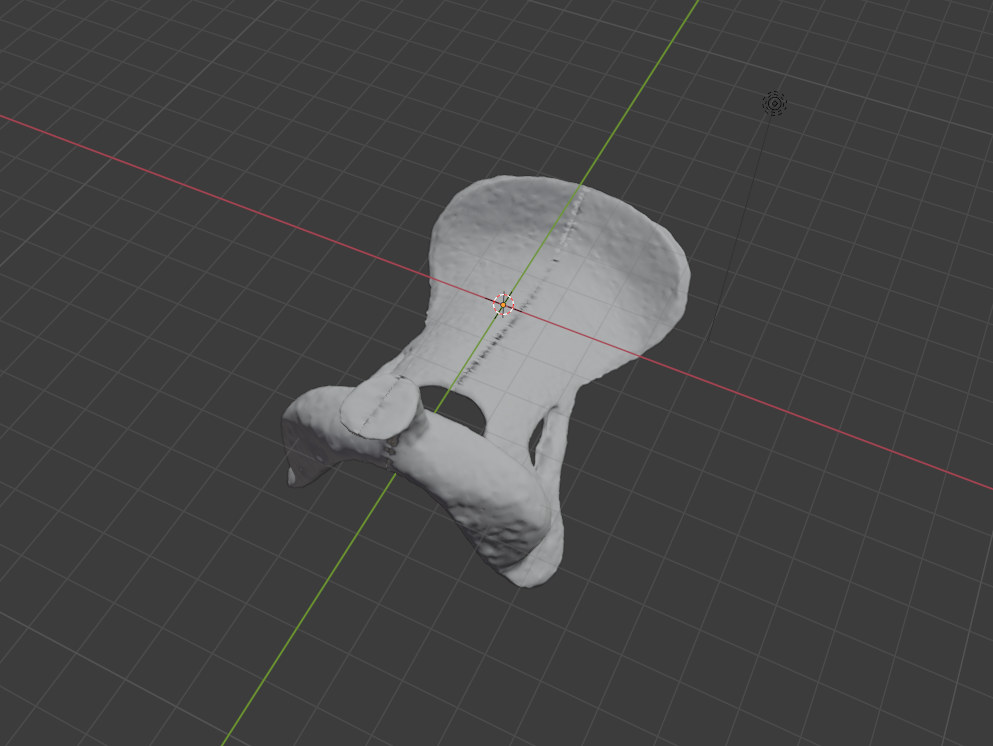
Saddle Rendering after Digitization.

Saddle Print and Master.
Upon approval, ALTAY printed a duplicates of the saddle various scales so they can test out their new product line and verify its what they were looking for.
After sending back the first prints, we were asked to digitize 2 additional scale models for the client. These went well, with a few of the smaller digitizations that took longer than expected. We are excited to continue to add more products and refine the photogrammetry process to better serve the hobby model community.
In the end it ended up as a cost effective solution for their modeling needs and provided an easy method to manufacture their products at different scales.